|
nomadic camera
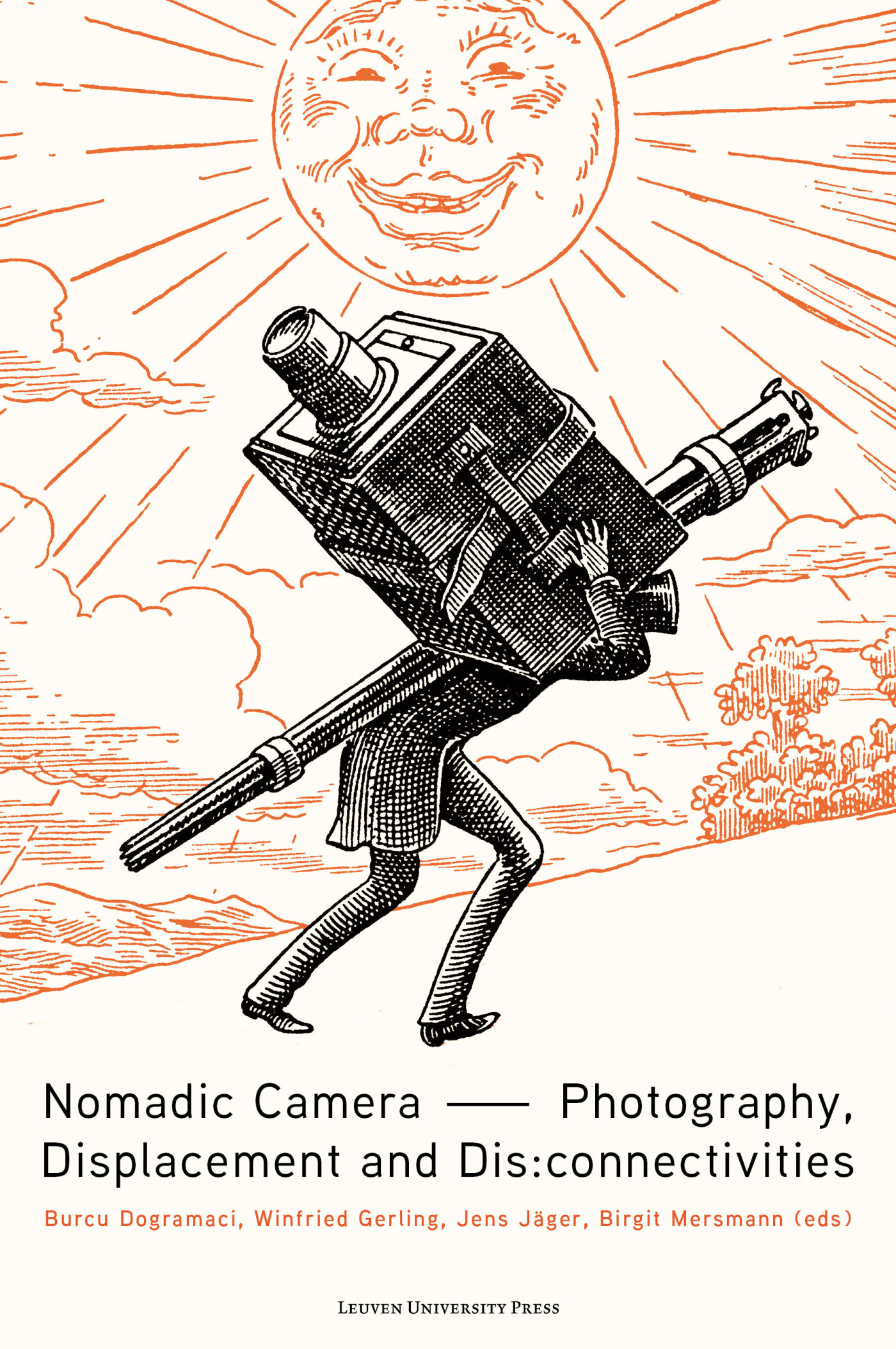
From its introduction in the early nineteenth century and through ongoing technical developments, photography has been a mobile medium closely tied to equipment, social conditions and cultural framings. The volume Nomadic Camera investigates the technical, medial and aesthetic relationship between photography and displacement in historical and contemporary perspectives. The contributing authors adopt the term ‘nomadic’ – signifying a transitory form of existence – to explore photography beyond static concepts of being and national boundaries. Viewing photography as a formative part of this history of mobility and migration, the book explores the interplay between the concepts of the ‘nomadic’ and the ‘camera’, offering new perspectives on photography as a medium on the move. The interdisciplinary contributions approach this topic from various angles. They examine photographic tools and technologies; investigate the role of bodies, agents, and performative acts in photographic practices; explore how photography constructs and conveys narratives of movement; and address issues of image circulation, archiving, and memory.
From its introduction in the early nineteenth century and through ongoing technical developments, photography has been a mobile medium closely tied to equipment, social conditions and cultural framings. The volume Nomadic Camera investigates the technical, medial and aesthetic relationship between photography and displacement in historical and contemporary perspectives. The contributing authors adopt the term ‘nomadic’ – signifying a transitory form of existence – to explore photography beyond static concepts of being and national boundaries. Viewing photography as a formative part of this history of mobility and migration, the book explores the interplay between the concepts of the ‘nomadic’ and the ‘camera’, offering new perspectives on photography as a medium on the move. The interdisciplinary contributions approach this topic from various angles. They examine photographic tools and technologies; investigate the role of bodies, agents and performative acts in photographic practices; explore how photography constructs and conveys narratives of movement; and address issues of image circulation, archiving and memory. Burcu Dogramaci is professor of art history and director of the Käte Hamburger Research Centre global dis:connect at the Ludwig-Maximilians-Universität München. In our challenging age of global migrations, displacements, and exiles, this book nuances our understanding of social realms that are shaped by the camera. - Steffen Siegel, Folkwang University of the Arts Multiperspective approach towards photography as a nomadic device and photographs as mobile objects of circulation.From its introduction in the early nineteenth century and through ongoing technical developments, photography has been a mobile medium closely tied to equipment, social conditions and cultural framings. The volume Nomadic Camera investigates the technical, medial and aesthetic relationship between photography and displacement in historical and contemporary perspectives. The contributing authors adopt the term ‘nomadic’ – signifying a transitory form of existence – to explore photography beyond static concepts of being and national boundaries. Viewing photography as a formative part of this history of mobility and migration, the book explores the interplay between the concepts of the ‘nomadic’ and the ‘camera’, offering new perspectives on photography as a medium on the move. The interdisciplinary contributions approach this topic from various angles. They examine photographic tools and technologies; investigate the role of bodies, agents and performative acts in photographic practices; explore how photography constructs and conveys narratives of movement; and address issues of image circulation, archiving and memory. Burcu Dogramaci is professor of art history and director of the Käte Hamburger Research Centre global dis:connect at the Ludwig-Maximilians-Universität München. In our challenging age of global migrations, displacements, and exiles, this book nuances our understanding of social realms that are shaped by the camera. - Steffen Siegel, Folkwang University of the Arts |